When your forecast is off, the first instinct is to interrogate the pipeline. Deal stages. Close dates. Rep confidence scores.
That is the wrong place to look.
Noisy forecasts are usually a book problem in disguise.
Garbage in, garbage out
A bloated book creates inflated pipeline. Reps log activity on accounts they are not seriously working. Deals get created to show coverage. Forecast categories fill up with entries that have no real momentum behind them.
From the top, it looks like a healthy funnel. Inside, it is noise.
The forecast does not lie. It reflects the book. And if the book is messy — oversized, poorly scored, full of low-fit accounts — the forecast is going to be unreliable no matter how tight your stage definitions are.
Where forecast error actually starts
Forecast accuracy is a lagging indicator. By the time you see it slipping, the problem is already several steps upstream.
It starts at territory design. Which accounts did each rep get? How well do those accounts fit your ICP? Are there enough of the right accounts to generate the pipeline the quota requires?
A rep with 300 accounts and no scoring tier will build pipeline that looks real and converts poorly. A rep with 80 tightly scoped, high-fit accounts will build pipeline that closes. The forecast reflects that difference. It always has.
What the CFO and CRO actually need
Finance and sales leadership are not asking for a better forecasting tool. They are asking for a number they can trust.
That trust is not built in the forecast call. It is built at carve, when someone made sure the territory had enough real TAM to support the quota assigned to it.
If that check did not happen, the forecast is already compromised. The number on the slide is a function of book design, not just execution.
Fix the source, not the symptom
Tightening stage exit criteria does not fix a bloated book. Better call inspection does not fix a territory with low ICP-fit. Adding a forecasting layer on top of bad book design produces a more precisely wrong number.
The fix is upstream. Score the accounts. Right-size the books. Make sure every rep's territory can actually generate the pipeline the quota requires.
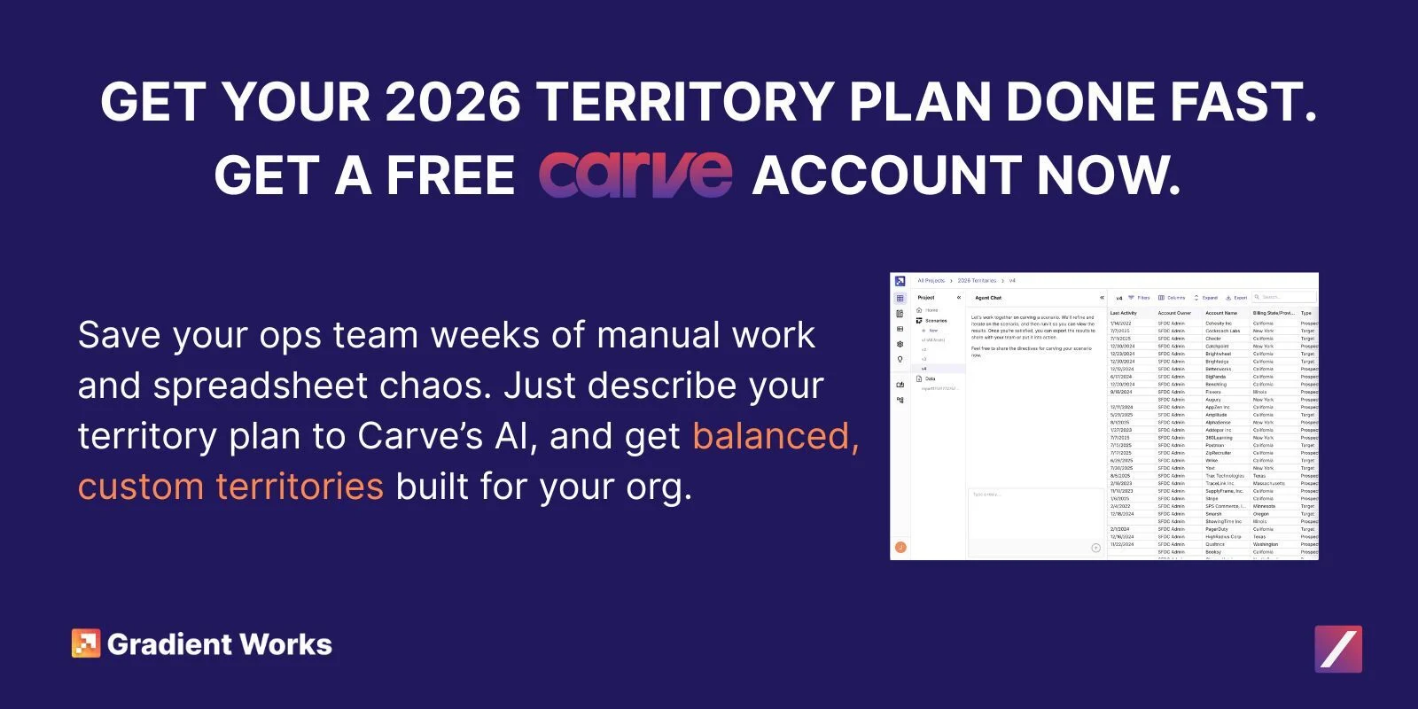
Carve lets you model ICP-fit scoring across your full account universe before you commit to a territory design. You can set thresholds, see TAM by segment, and know whether the book can support the number before the quarter starts.
Market Map surfaces the accounts that match your ICP across your total addressable market, so you are not carving from a pool that was already too thin.
A number you can trust starts with a book you can defend
The forecast is a reflection of your GTM design. Clean books produce clean pipeline. Clean pipeline produces a forecast worth presenting.
If the number keeps surprising you, stop adjusting the forecast. Start adjusting the books.
That is where the noise is coming from.