Better outbound starts with better books
With dynamic books, inside sales teams work smaller, focused books that refresh automatically. Every rep gets the highest-fit accounts up to their capacity.
Say hello to dynamic books
A better approach to sales territories and account selection, built on best practices from top B2B sales teams
The inside sales team of the future is smaller, account based, and agile. They use dynamic books - a modern way of assigning accounts to sales reps, continually matching the best available accounts with rep capacity.
Dynamic books ensure that all of your highest potential accounts are always being worked, and that every rep has a book of the best possible account to work.
No more missed opportunities. No more imbalanced territories. No more account hoarding. With dynamic books, teams increase rep productivity and pipeline creation.
How Box rethought account coverage with dynamic books
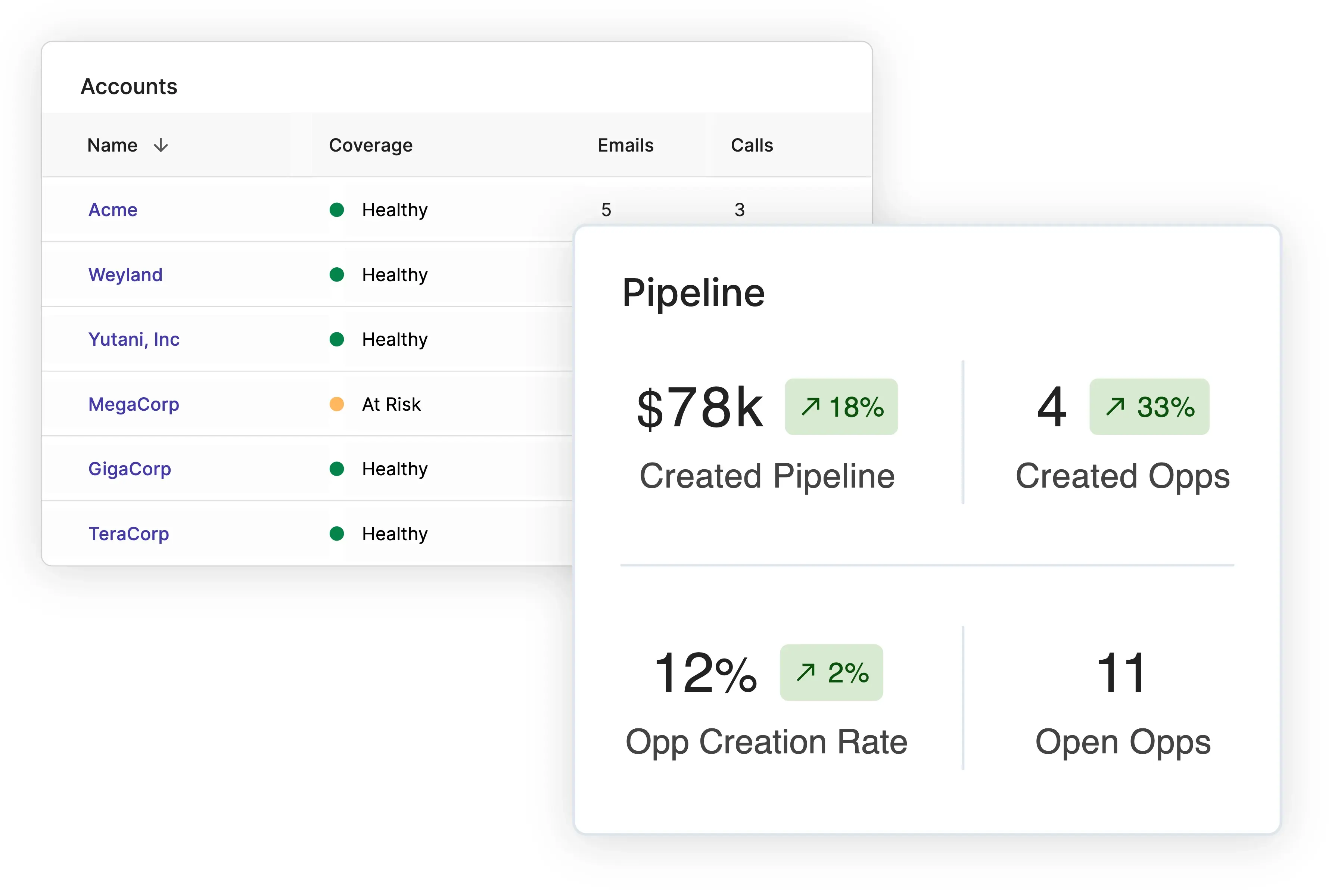
Box moved from 2,000+ accounts per rep down to 200–250. Books refresh automatically, so reps stay focused on the highest-potential accounts without RevOps touching a spreadsheet. Powered by Gradient Works Bookbuilder.
“We used to hand reps zip codes. Now, we hand them opportunity.”
Nora Soza
Sr Director GTM Strategy & Operations, Box
Why dynamic books?
Dynamic books is a modern sales territory design that continually assigns the highest-potential accounts to reps with available capacity.
Traditional territory design is inefficient and unfair for many sales teams. Built on best practices from high performing B2B inside sales teams, dynamic books is an alternative way of equitably allocating accounts to increase rep productivity.
A dynamic books approach relies on books instead of territories. Every rep is assigned a book of accounts, based on account fit and in-market timing, as well as the rep’s available capacity. When an account is converted or disqualified, it moves out of the rep’s book and a fresh new account moves in.
Dynamic books allows sales teams to continuously manage account supply and demand. Best of all, dynamic books eliminates the need for annual territory planning and complicated territory spreadsheets.

"When sales territories are out of balance, organizations spend too much money and time on low-potential customers, while spending too little on high-potential customers. As a result, sales organizations can leave millions of dollars in lost productivity unrealized."
Automate your dynamic books process
Gradient Works Bookbuilder automates the full dynamic books process, ensuring reps always have balanced books with the highest-potential accounts.
Bookbuilder customers have transformed their sales productivity by:
- Creating more pipeline
- Getting more reps on target
- Ramping new reps faster
- Working more high-potential accounts
- Saving hours of manual effort
The trouble with territories
Only 53% of sales reps regularly hit quota. 76% of companies use geographic territories. These things are related.
Despite all your investments in coaching, training and tools, attainment still suffers.
You’re missing out on revenue because you’re not deploying your reps effectively.
It’s not your fault. It’s because your territory design still relies on methods developed over 100 years ago. And 83% of companies still design their territories with spreadsheets.
But opportunity is not distributed geographically.
With a traditional territory model, some reps get territories with so many high-potential accounts they can’t talk to them all, while other reps starve in territories with low potential. The result? Uneven attainment, unhappy reps, unrealized revenue.
100 years ago, this was the best sales teams could do. But we can do better now. That’s where dynamic books comes in.
FAQs
Everything you ever wanted to know about dynamic book management
-
Dynamic books continually matches available rep capacity with the best available accounts.
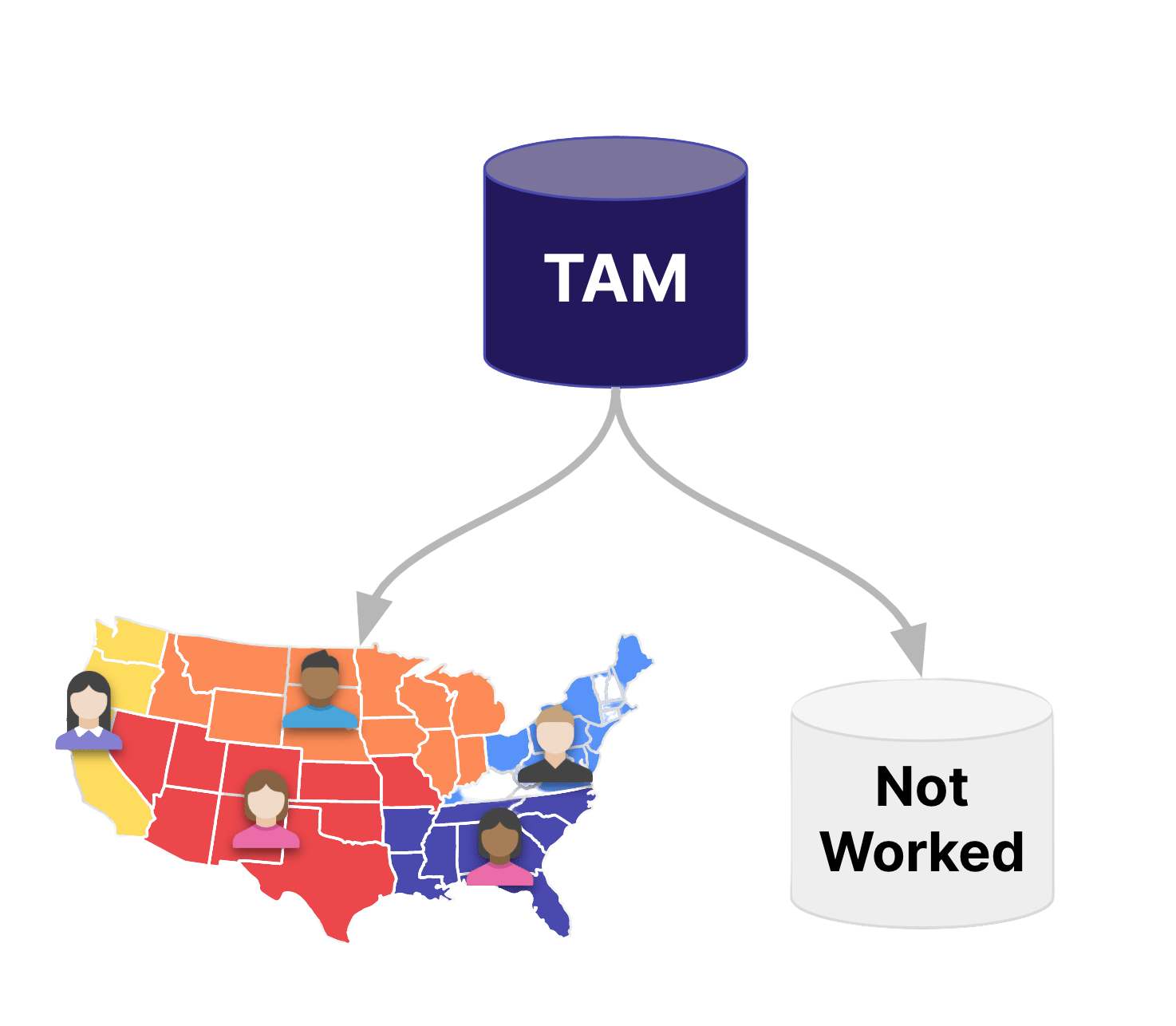
Static territories treat the list of accounts (the “territory”) as fixed and the rep as changeable (e.g. a rep is “assigned to a territory”). Dynamic books treats the rep as fixed and the list of accounts (the “book”) as dynamic.
Instead of a fixed list of accounts, reps are assigned a “target book” which defines the types of accounts they’re responsible for working. For example, a mid-market SDR might be responsible for working 100 accounts with more than $50MM but less than $500MM in annual revenue. When that rep starts, the best available accounts in the pool that meet the mid-market criteria would be distributed to her. As she works those accounts, she may learn that some are disqualified because they are with a competitor or have undergone M&A. When she learns this, she can return the account to the pool and a new mid-market account is distributed to her. She is responsible for actively working each account in her book. If she stops working an account, it will be retrieved from her and placed back in the pool or future distribution.
-
We use this term to describe any territory design that allocates a predefined group of accounts to a rep that they’re responsible for over a long period of time (usually at year), regardless of the account’s buying stage. Historically, sales teams have carved up their addressable market into geographic areas (territories) during an annual planning process. They then assign a sales rep to each pre-defined territory. Territories do not, however, have to be geographic. Companies may give reps a group of “named accounts” that they’re responsible for. These accounts may have no particular geographic arrangement. We would still consider this a “static territory” because the set of accounts doesn’t change over time, which is a core feature of dynamic books.
-
Dynamic books is designed for inside sales teams that spend meaningful time on outbound prospecting. The core mechanic is to distribute accounts, retrieve them when unworked, and repeat. That cycle works best when reps are actively building pipeline from a pool.
Inbound teams see one related benefit: without retrieval rules, accounts that go cold or never convert sit in a rep's book indefinitely. Reps hoard them. Retrievals fix that. But if your team's pipeline mostly comes in rather than going out, dynamic books addresses a secondary problem rather than a primary one.
-
They go together well but dynamic books and ABM can be used separately. ABM shifts the focus from engaging with individual contacts to engaging with an account as a whole. Most ABM products also aim to provide intent data about buying signals for specific accounts. These tell you if the account is in-market for a solution like yours. Many companies apply ABM to static territory models: reps can make use of intent information on accounts in their territory to prioritize follow-up. In this model, unassigned accounts usually remain unworked even if they demonstrate intent. If you’re already using ABM, dynamic books allows you to make the most of your investment. Dynamic books make it possible to ensure reps are working current high-intent accounts and can set low-intent accounts aside until they demonstrate intent again.
If you don’t have an ABM product to provide intent signals, dynamic books still helps you more effectively cover your TAM.
-
It depends on how full-cycle reps spend their time. If they prospect outbound and own quota, dynamic books helps them stay focused on the right accounts. Retrieval and distribution mechanics work the same for AEs running their own outreach as they do for SDRs.
If a full-cycle rep primarily works inbound-sourced pipeline and rarely prospects cold, the benefit is smaller. The book will feel like a constraint rather than a tool.
-
Dynamic book management is designed for new business inside sales teams. Because reps work with a dynamic list of accounts, dynamic books is not a good choice for highly relationship-driven sales (like enterprise teams) or situations where geography matters a lot (such as field sales). This means it’s not a great choice for account management functions that are designed to build long-term relationships.
-
Dynamic books works well with pod architectures. A typical setup: run a distribution to fill AE books from the account pool first, then assign SDRs to those same accounts as ISOs. Each part of the pod works from clearly defined books, with retrievals keeping both in sync as accounts progress through the pipeline.
Without pods, SDRs work independent dynamic books and route booked meetings to AEs. Either structure works. The mechanics are the same either way.
-
Static territory models are inherently unfair. Some reps don’t have enough quality in-market accounts to work while others have too many and can’t work them all. Dynamic book management ensures that the highest quality, highest-fit accounts are evenly distributed across reps.
Here’s an example:
Jane has the Northern Arkansas territory with 100 accounts while Joe has Northern California with 100 accounts. However, all accounts aren’t created equal and aren’t in market at the same time. Jane’s territory may only have 20 in-market high-quality accounts while all 100 of Joe’s are great. Further, let’s say that each rep can really only work 60 accounts at once. Jane will use her time finding increasingly creative ways to reach out to her 20 accounts or drum up business on the 80 remaining marginal accounts, while Joe focuses on the top 60 cream of the crop and ignores a large number of his accounts. Dynamic books ensures that Jane and Joe split the 120 total accounts evenly and are each using their efforts to work 60 high quality accounts.If you have a conversion rate of 10% on high quality accounts here’s what you’ll get:
- Static Territories
- Jane: 2 opps (20 * 10%)
- Joe: 6 opps (60 * 10%)
- Total: 8 opps (Book productivity: 6.7%)
- Dynamic Books
- Jane: 6 opps (60 * 10%)
- Joe: 6 opps (60 * 10%)
- Total: 12 opps (Book productivity: 10%)
What about the 80 accounts that were in Jane’s territory? Well, they go into the pool to be assigned if a) they demonstrate meaningful buying signals or b) there’s no other more valuable accounts to work.
-
Territory design: The overall strategy behind how you think about and structure territories
Territory planning: The periodic (usually annual) process of carving up territories to give to reps
Territory management: The ongoing process of maintaining and optimizing your territory distribution
Dynamic books is a form of territory design, and if you adopt that form of territory design, your approach to territory planning and management will drastically change. You may never have a need for territory planning again.
Here are other terms we use in dynamic book management.
- Pool: A group of accounts that are unassigned and available to be worked
- Book: A group of accounts currently owned (and being worked) by a rep
- Distribution: Sending one or more unworked accounts to a rep to be worked
- Return: A rep sends a fully worked and disqualified account back to the pool
- Retrieval: An automated return of accounts that are not actively being worked to the pool
- Signals: Fit and timing criteria that indicate whether or not an account is high potential or high intent
- Working: An account is being "worked" when a rep is actively engaging (or at least actively trying to engage) with a prospect. An account is no longer being worked after some period of time after the last meaningful activity.
- Rest: A period of time when an account sits unworked in the pool before it is eligible to be worked again
-
Gradient Works Bookbuilder automates the full dynamic books process, including account distributions, retrievals, book balancing, and target book configuration. Request a demo to see how it works for your team.
Read more about account allocation and distribution
Ready to move to dynamic books?
Or just want to learn more? Let's have a quick conversation. Talk to our team about how dynamic book management software from Gradient Works can help increase attainment and keep your reps' books balanced.