If you are waiting for reps to “get through” their entire book, you are already behind.
Most sales teams say the same thing every quarter. The accounts are there. The TAM is massive. The reps just need to work it. But weeks go by, pipeline stalls, and the same high-potential accounts sit untouched. Not because reps are lazy, but because the math never worked in the first place.
A book with hundreds or thousands of accounts is not a strategy. It is wishful thinking.
Big books create invisible failure
When reps carry oversized books, a few things always happen. They cherry-pick the obvious accounts. They spend time sorting instead of selling. And they quietly ignore the rest.
From the outside, it looks like coverage. Inside the system, it is chaos.
One mid-market SaaS company we worked with had reps holding more than 3,000 accounts each. On paper, coverage looked great. In reality, no one knew which accounts mattered. A high-fit prospect sat idle for months simply because it was buried. Once the team shrank books to a few hundred focused accounts, one rep surfaced a top-tier account, reached out, and closed a deal within a week. That opportunity had been there all along, check out more how they did it here.
Another fast-growing HR platform saw a similar pattern. Reps had so many accounts that prioritization became guesswork. Great prospects were lost in the noise. When they moved to smaller, dynamic books, reps stopped asking “who should I work next?” and started building real relationships. Pipeline followed.
Smaller books did not limit opportunity. They unlocked it.
Focus beats abundance
The idea that more accounts equal more pipeline is deeply ingrained. It is also wrong.
Reps can only work so many accounts at once. Beyond a certain point, adding more accounts does not increase output. It reduces it. Smaller books force focus. Focus drives relevance. Relevance creates meetings.
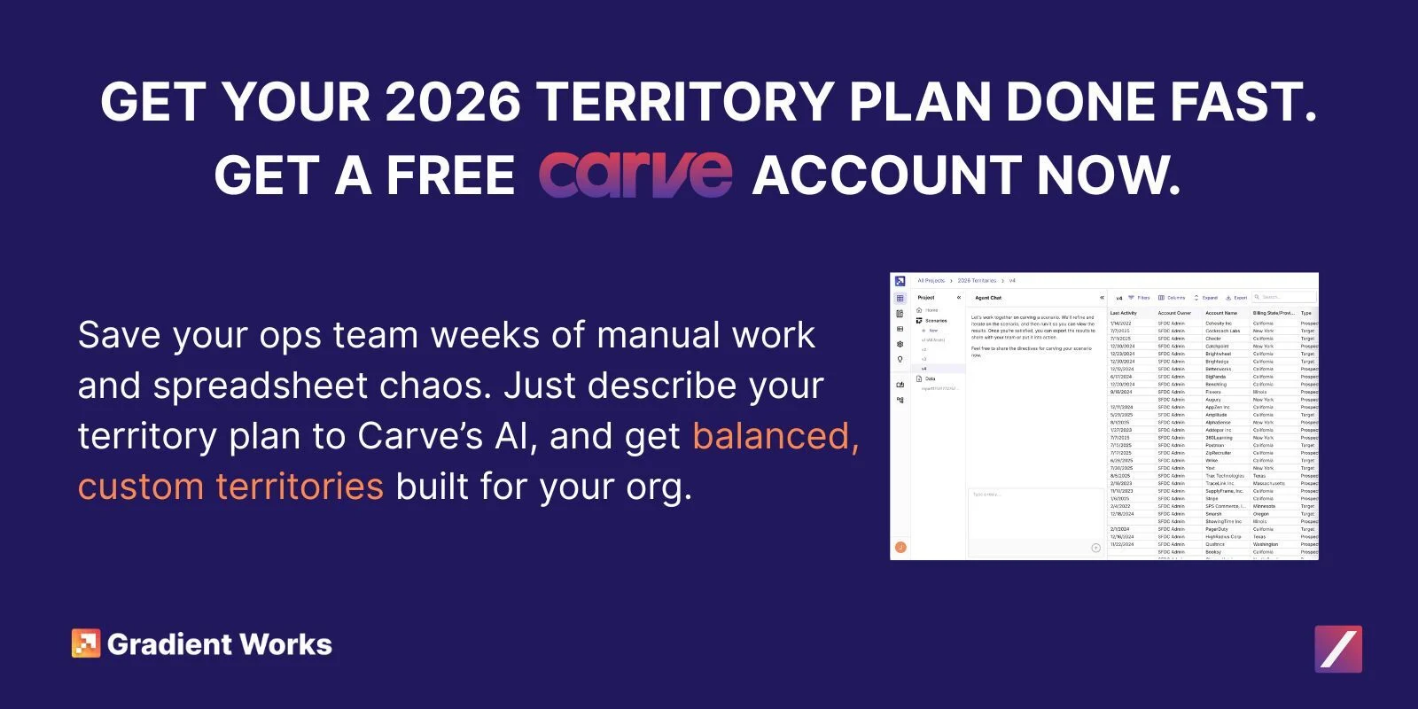
This is where tools like Market Map and Carve change the equation. Instead of handing reps everything and hoping for the best, you score and segment your TAM first. Market Map helps identify which accounts actually fit your ICP and which ones are noise. Carve lets you build and test smaller books around those high-fit segments, without a full re-carve or weeks of spreadsheet work.
You are no longer shrinking books blindly. You are tightening them around real opportunity.
What high-velocity books actually look like
Shrinking books is not about taking opportunity away. It is about making opportunity usable. Teams that do this well tend to follow the same playbook:
- Books are small and intentional. Reps work a manageable number of high-fit accounts, not a graveyard of leftovers.
- Accounts are refreshed regularly. Once an account is worked to completion, it leaves the book and a new one replaces it.
- Prioritization happens before assignment. Market Map scores and clusters accounts so reps never waste time disqualifying.
- Ops can adjust without drama. Carve makes it easy to rebalance when strategy, segments, or headcount change.
- Coverage becomes visible. Leaders can see which accounts are worked, which are idle, and where pipeline risk is building.
This model is how teams move from hoping reps will find pipeline to designing systems that produce it.
This isn’t just an ops win
Yes, RevOps gets time back. Fewer spreadsheets. Faster changes. Less firefighting. But the real win is rep focus.
Smaller books remove guesswork. Reps know exactly where to spend time, go deeper on the right accounts, and build momentum faster. That’s why adoption sticks. As one ops leader put it, reps stopped asking for more accounts and started asking better questions.
You don’t need more headcount or a bigger TAM. You need tighter books built around real opportunity and a system that keeps them fresh. Carve and Market Map make it easy to test, adjust, and improve without blowing up your model.