




If you’re in RevOps or sales leadership, you know the end of the fiscal year is less of a finish line and more of a starting gun. Last year’s territory misfires: imbalanced books, rep complaints, and missed pipeline don’t just go away. They roll forward, dragging down attainment and morale. So why does territory planning still feel like a once-a-year spreadsheet shuffle?
Here’s the hard truth: traditional carving assumes static conditions. Same headcount. Same roles. Same rules. But reality never plays along. Headcount shifts. Segments evolve. Reps leave. And your perfectly balanced plan is obsolete before kickoff.
So let’s fix it now. Before Q1 builds a pipeline gap you can’t close.
The problem with static carving
Annual territory planning is supposed to bring order. But what it actually creates is imbalance.
- You carve books assuming roles won’t change.
- You distribute accounts assuming every rep will start on day one.
- You assign geos or verticals without clear fit, leading to mismatches between reps and markets.
What you end up with is good accounts sitting idle, great reps underperforming, and frustrated sellers wondering why they’re working scraps while someone else lucked into the good patch.
The better way: Dynamic territory design
With Carve, you don’t wait for headcount to finalize or roles to settle. You build scenarios based on what’s true right now and adjust as things shift.
Start with Market Map to identify your best accounts: not just by firmographic filters, but by actual similarity to your top customers. From there, use Carve to model territory assignments based on headcount, verticals, segments, and rep availability today, not some idealized version of your org from six weeks ago.
Need to onboard new reps with balanced books? Carve can do that in minutes.
Need to re-cut based on a surprise enterprise hire or a new SMB pod? You don’t have to rebuild the whole model. Just adjust inputs and rerun.
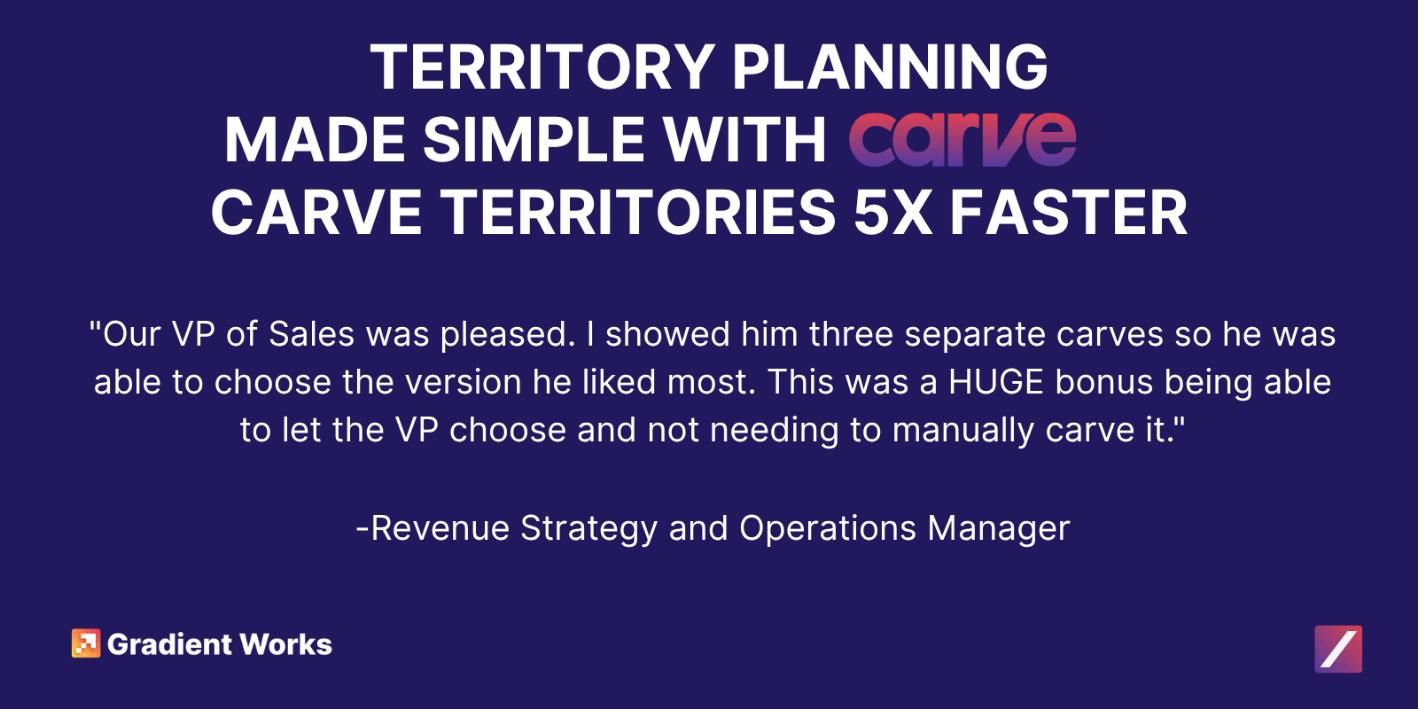
This isn’t theoretical. One Gradient Works customer rebuilt their entire go-to-market plan in a single day after leadership made a late-breaking decision to split their team by segment.
Why this matters now
Start-of-year territory planning isn’t just an ops exercise. It’s a performance multiplier or a drag.
A bad carve means good accounts go untouched. It means reps waste time on unworkable prospects. It means more missed quarters, more blame games, and more burnout.
But a better carve means reps are focused from day one. It means ops can spend less time firefighting and more time optimizing. It means you can run plays instead of plugging leaks.
What you can do right now
Before your Q1 fully ramps, pressure-test your territories. Here’s a quick checklist to guide your next move:
- Are rep books balanced by actual capacity and ICP fit?
- Do books reflect current headcount, not a plan from last quarter?
- Are there high-potential accounts sitting in the wrong rep’s name or in no one’s name?
- If a new hire starts tomorrow, do you know what book you’d give them?
- Can you re-cut a territory in less than an hour if something changes next week?
If the answer to any of those is no, it’s not too late.
That’s what Carve lets you do in a single day.
You can map your entire market, model multiple territory scenarios, and roll out rep-ready assignments, all before your next standup. It’s fast, flexible, and built to handle the real-world chaos of headcount shifts, role changes, and strategic pivots.
Carve isn’t another slow planning tool. It’s the fastest way to take action when it counts.


.png)